
WeLive - Video Chat&Meet
WeLive TeamSocial
4.1136.00 Reviews
- Version
- 3.9.3
- Installs
- 10.00M
- Age Rating
- Mature 17+
Screenshots

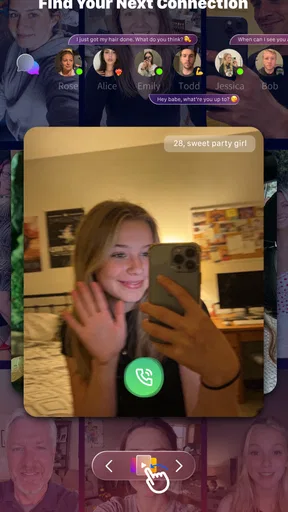






Our Review of WeLive - Video Chat&Meet
 Analysis by Appyee
I approached WeLive - Video Chat&Meet as a social app for people who want conversation to feel more immediate than a text thread. Its focus is one-to-one video interaction with people from around the world, with playful elements intended to make the first few minutes less awkward. After spending time with it, my impression is that it sits somewhere between a casual video-chat service and a lightweight social discovery app. It is not trying to replace a serious messaging platform, and that distinction matters when deciding whether it belongs on your phone.
The app is free to install, although optional in-app purchases range from less than a dollar to nearly two hundred dollars per item. It is made by WeLive Team and is listed for mature users aged seventeen and over. That age guidance is important here: this is a service built around meeting unfamiliar people by camera, so I would treat it as an adult social environment rather than a general-purpose family chat tool.
How WeLive feels in everyday use
The most natural way to use WeLive is in a short, open-ended session. You are not necessarily arriving with a list of contacts or a carefully planned group event. Instead, the appeal is the possibility of starting a direct video conversation with someone outside your usual circle. That can be refreshing when ordinary social apps have become dominated by familiar feeds, reactions, and delayed replies.
I found the one-to-one format easier to understand than a crowded live room. There is one conversation to follow, one person to respond to, and less pressure to perform for an audience. The playful side also gives the interaction somewhere to go when introductions run out. A small activity or shared moment can be more useful than another generic “what do you do?” question, especially when two strangers do not share the same first language.
That simplicity comes with a trade-off. A direct video call feels personal very quickly, and the app is less forgiving than text when the other person is uninteresting, uncomfortable, or simply not a good match. I would not open it expecting every connection to become a friendship. I see it more as a tool for spontaneous social contact, where the value comes from finding a few enjoyable conversations rather than making every session productive.
A realistic scenario for using it
Imagine finishing work or school with twenty minutes to spare and wanting something more social than scrolling. WeLive can fit that moment: I would enter with a simple goal, such as having two short conversations, rather than expecting a long-term connection immediately. If the first exchange feels forced, moving on is more sensible than trying to rescue it. If the conversation is comfortable, the video format makes it possible to notice tone, expressions, and timing that text would hide.
Another practical use is language practice, but I would keep expectations realistic. Speaking with people from other countries can expose you to natural conversation and different accents, yet the app is not a structured language course. There are no lessons replacing a dedicated learning service. Its strength is the unplanned human exchange, not correction, curriculum, or measurable progress.
What makes the format different from ordinary social apps
Compared with text-first networks, WeLive removes much of the editing that makes online conversation feel polished. You cannot spend several minutes composing the perfect response while the other person waits on camera. That immediacy can create genuine chemistry, but it also means I recommend using it when you are comfortable being seen and heard without much preparation.
It also differs from conventional video-call apps such as services designed for friends, family, work, or scheduled groups. Those tools are strongest when you already know who you are calling. WeLive is aimed at the discovery side of socializing, so the central question is not “which contact should I invite?” but “do I want to meet someone new right now?” If your priority is reliable communication with people you already trust, a normal messenger is likely the better choice.
Small habits that improve the experience
My first useful habit was to decide what kind of session I wanted before opening the app. If I wanted relaxed conversation, I avoided treating every call like an audition. If I wanted to play or joke around, I made that clear early instead of waiting for the other person to guess. This sounds minor, but a direct video chat becomes less awkward when both people understand the tone.
A second tip is to protect the environment around the call. I would use headphones when possible, check the background, and avoid opening the app in a place where private conversations can be overheard. These are not glamorous adjustments, but they make a noticeable difference in comfort and privacy. Because the interaction is live, a noisy room or a distracting background can dominate the conversation before either person has a chance to connect.
A third is to leave quickly when the exchange crosses a personal boundary. The social value of meeting new people does not require tolerating rude behavior, pressure, or unwanted questions. I would never share an address, financial details, passwords, private documents, or anything else that could identify or expose me. The mature age label should encourage sensible judgment, not create a false sense that every adult interaction is automatically safe.
The current product and its recent position
The current version is 3.9.3, and the app supports devices running Android 7.0 or later. That makes it accessible to people who are not using the newest phone, which is helpful for a social service where your potential conversation partners may have very different hardware. Still, video quality and responsiveness can depend heavily on the phone, camera, microphone, and connection at each end, so I would not judge every awkward call as a flaw in the app itself.
WeLive has been available since September 16, 2021, and its public reach is substantial, with more than ten million installs. Users give it an average score of 4.1 from roughly fifty-five thousand ratings. I read those figures as evidence of a sizeable audience and a generally positive reception, not as a promise that every match will be enjoyable. Social apps are unusually dependent on who happens to be online when you are there.
The version number also suggests a product that has moved beyond its earliest release rather than remaining a simple experiment. For existing users, that is encouraging because a mature release usually means the developer has had time to refine the basic experience. However, a version label alone cannot tell me whether a particular change improved discovery, moderation, call stability, or spending controls. I would separate the confirmed current build from assumptions about what the next update may bring.
What the evolution means for people who already use it
For someone returning after a long break, I would expect the overall identity to remain recognizable: direct video socializing, international discovery, and playful interaction are still the reasons to open it. The sensible approach is to revisit the settings and spending choices rather than assuming the app works exactly as remembered. Social products often change around the edges, and a quick check before starting conversations can prevent an old habit from becoming an unwanted purchase or an uncomfortable exposure.
New users should also give the app a fair trial without judging it from one conversation. A quiet or mismatched first session may reflect timing and audience more than the entire service. I would try it at a few different moments, keep sessions short, and pay attention to whether the kind of people and conversations available actually suit me. If the same friction appears repeatedly, that is more useful evidence than a single disappointing call.
The developer, WeLive Team, has built an experience where the community is part of the product. That means improvements to interface behavior can help, but they cannot completely solve the unpredictability of human interaction. Even a polished release will feel inconsistent if the available matches do not share your interests, language comfort, or preferred pace.
Where the experience still asks for patience
The biggest limitation is the lack of control that comes with spontaneous matching. I may want a friendly conversation, while the next person wants attention, entertainment, or something more personal. The one-to-one design intensifies that mismatch because there is no group dynamic to soften it. Anyone who prefers carefully selected contacts or predictable communities may find the experience tiring rather than liberating.
There is also an unavoidable privacy trade-off. Camera-based socializing reveals more than a profile picture and a message: your voice, surroundings, mannerisms, and immediate reactions all become part of the interaction. I would use a neutral background and keep identifying details out of view. I would also remember that ending a call is not a failure; it is a normal part of managing an open social environment.
The purchase model deserves attention as well. Since optional items can cost from $0.99 to $199.99, I would not tap through payment prompts casually, especially during an exciting conversation. Free access makes trying the service easy, but the presence of high-priced items means users should establish a firm budget before exploring extras. Parents should also note that the mature rating and purchase range make this unsuitable for unsupervised younger users.
Another gap is purpose. WeLive can help me meet someone new, but it is not the right place for every kind of relationship. It is weaker than a dedicated professional network for career contacts, weaker than a classroom for organized learning, and less dependable than a private messenger for keeping in touch with family. Its value is narrow but clear: spontaneous, personal video interaction with people beyond my existing contacts.
Who should try it, and who should skip it
I would recommend it to adults who enjoy brief conversations, are comfortable appearing on camera, and like the unpredictability of meeting people from different places. It can be especially appealing when text-based social media feels repetitive and a person wants a more human exchange without arranging a formal call in advance.
I would be more cautious recommending it to someone who dislikes strangers, has limited data or battery, or wants strict control over who can contact them. It is also a poor fit for anyone seeking a quiet, private space for close friends. In those cases, a conventional encrypted messenger, a scheduled video service, or a moderated interest community would probably deliver a better experience.
People who are sensitive to social pressure should set boundaries before using it. I would decide in advance how long I want to stay, what topics are off limits, and what behavior means I will end the call. That turns the app from an open-ended obligation into a tool I control. The best sessions are voluntary and easy to leave, not conversations I continue because I feel guilty.
What I would watch as the app continues
For future updates, I would pay closest attention to how WeLive handles the balance between spontaneity and user control. Better ways to shape the kind of conversation I want could reduce mismatches without removing the surprise that gives the app its identity. I would also look for clearer handling of boundaries, reporting, and unwanted interactions, because trust matters more in live video than it does in a normal comment feed.
I would also watch whether the developer keeps the free entry point understandable while making optional purchases easy to manage. The current price range makes transparency especially important. A social app should let me enjoy its basic purpose without making me feel that spending is required to keep a conversation moving.
Finally, continued attention to older Android devices would be valuable. Support for Android 7.0 or later gives the app a broad technical reach, but real-world video calls still need careful optimization. Stability, quick connection setup, and clear feedback when a call is not working would matter more to me than decorative additions.
My recommendation after using it
WeLive - Video Chat&Meet is worth trying if you want social discovery to happen through live, one-to-one conversation rather than likes and messages. I like its directness, and the playful approach gives strangers a better chance of finding a shared rhythm. The experience feels most rewarding when I treat it as a series of small encounters, not as a guaranteed route to friendship.
At the same time, I would use it deliberately. The mature audience, camera-based format, unpredictable matching, and optional purchases all call for firm personal boundaries. I would keep private information private, leave uncomfortable calls immediately, and avoid spending until I fully understand what an item does. Those habits are not optional extras; they are part of using this kind of service well.
My final view is positive but specific: this is a social app for curious adults who enjoy meeting unfamiliar people and can handle occasional awkwardness. It is not a replacement for a trusted messenger, a professional video platform, or a structured learning community. If spontaneous international video chat sounds energizing, the free starting point makes it easy to explore. If control, privacy, and predictable contacts matter most, I would choose a more conventional alternative instead.
Verdict
Strengths of WeLive - Video Chat&Meet
- Quick video matching makes meeting new people easy.
- Supports live conversations with users from different countries.
- Simple interface is easy to navigate for first-time users.
- Fun social interactions can help reduce boredom.
- Profile discovery offers opportunities to find shared interests.
Limitations of WeLive - Video Chat&Meet
- Some features may require coins, subscriptions, or in-app purchases.
- User experiences can vary depending on the quality of available matches.
- Public video chats may expose users to inappropriate behavior.
- A stable internet connection is needed for smooth video calls.
- Privacy settings should be checked carefully before sharing personal details.
Similar Picks in This Category
View All
Meta Platforms, Inc.4.6

Instagram4.0

Likee-Live, Chat & Party Games
Likeme Pte. Ltd.4.4

Facebook Lite
Meta Platforms, Inc.4.5

TikTok - Videos, Shop & LIVE
TikTok Pte. Ltd.4.0

Moj: Free Short Drama & Reels
ShareChat4.1
Frequently Asked Questions
What is WeLive - Video Chat&Meet, and how does it work?
WeLive - Video Chat&Meet is a social communication app designed for meeting people through video chats, live interactions, and messaging. After creating a profile, you can browse available users, start conversations, and potentially make new connections based on shared interests or location. Features and matching options may vary by region, account status, and the version installed.
Is WeLive - Video Chat&Meet free to download and use?
The app is generally available to download at no initial cost, but some communication, discovery, or entertainment features may require in-app purchases, virtual currency, subscriptions, or other paid options. Before spending money, check the current pricing shown inside the app and review the subscription terms carefully. Availability of free credits or limited features can change over time.
Is WeLive - Video Chat&Meet safe for meeting strangers online?
As with any video-chat or social-discovery platform, you should remain cautious when interacting with people you do not know. Avoid sharing your home address, financial information, passwords, private documents, or intimate content. Use the app’s blocking and reporting tools when necessary, and remember that profiles may not always represent a person accurately. Never arrange an in-person meeting without taking appropriate safety precautions.
Does WeLive require access to my camera, microphone, or location?
Video and voice conversations normally require permission to use your device’s camera and microphone. Depending on the app’s features, location access may also be requested to support nearby-user discovery or personalization. You can manage these permissions through Android or iOS settings, and it is sensible to grant only access that you are comfortable providing. Some features may not work if permissions are denied.
Can I delete my WeLive account or report inappropriate users?
Most social video-chat apps provide tools for blocking, reporting, and managing account information, although the exact menu names and deletion process may differ between app versions. Look in the profile, settings, help, or account-management sections for the relevant options. If you encounter harassment, scams, explicit content, or suspicious behavior, stop communicating, save useful evidence, report the account, and contact official support.
